
Language Teacher Recruitment and Retention in England’s Schools: Practitioner perspectives
Ann-Marie Hunter and Zhu Hua | 10 August 2026 | Policy paper
England is facing a deepening teacher recruitment crisis, with language teaching emerging as one of the most severely affected areas (British Council, 2025).
Drawing on a survey conducted by the National Consortium for Language Education (NCLE), this paper expands on the findings of Zhu Hua et al (2025) to highlight the recruitment and retention of language teachers in English state-funded schools from the perspectives of practitioners.
The NCLE survey of 40+ schools reveals significant variation in recruitment experiences linked to school context, with some reporting that their location and reputation are responsible for challenges they face.
Practitioners highlight the importance of language departmental culture, school reputation, and leadership in mitigating substantial challenges in the recruitment and retention of language teachers.
This paper argues for targeted policy and multifaceted interventions that recognise contextual variation.
Recommendations include reforming visa pathways (e.g. simplifying the visa requirement for MFL teachers from overseas), strengthening school-to-school networks, supporting departmental development, and reconsidering PGCE languages pathway closures.
Introduction
While the broader challenges in teacher recruitment are well-documented, language education experiences particular and longstanding difficulties. The Department for Education (DfE) has pledged to recruit 6,500 new teachers, backed by a £700 million budget in July 2024, and there have been initiatives to address recruitment and retention issues for secondary languages (DfE, 2025). Government bursaries for shortage subjects (including languages) have existed since the early 2010s as part of efforts to address recruitment challenges. Languages were formally designated as a priority subject for bursaries alongside STEM subjects from 2013 onwards, following persistent shortages in Modern Foreign Languages (MFL). While bursary schemes have remained a central feature of teacher recruitment policy, there has been some uncertainty regarding the level and availability of funding, for example, following the withdrawal of bursaries for overseas trainees in subjects such as physics and languages.
The report published by Long and Bridges (2026) provides an overview of teacher numbers and initiatives to encourage teacher recruitment and retention: in addition to bursaries and scholarships, there are Early Career Teacher Entitlement, Student loan reimbursement scheme and International Qualified Teacher Status (iQTS). Other language teacher incentives include the British Council Languages Teacher Training Scholarship which was introduced in 2018 to attract high-calibre graduates into teaching French, German, and Spanish. These scholarships include tax-free funding and professional development and mentoring opportunities, and are renewed annually. The Goethe-Institut also provides some short-term solutions for staffing and recruitment issues for the teaching of German through its ‘Vorsprung’ programme.
Although the recruitment target for language teachers is cautiously predicted to be met and retention has improved this year, language teacher recruitment continues to present challenges (Howson, May 2026). Languages have the highest proportion of teaching hours delivered by non-specialist teachers with around one third of language teachers estimated to be non-specialists. This may make language departments appear less attractive to prospective candidates. It should also be noted that the current target is lower than in previous years due to changes in the methodology used to calculate teacher demand and does not account for historical under-recruitment. New immigration rules have complications for the recruitment of trainee teachers, as debated by the All-Party Parliamentary Group (APPG) on Modern Languages in April 2026. Other literature points to a complex interplay of factors contributing to this challenge (Owston and Bradury, 2024). National reports from the National Foundation for Educational Research (NFER) and Ofsted highlight that teacher workload, pupil behaviour, and pay competitiveness are persistent issues driving attrition across subjects, with language teaching particularly affected due to its marginalisation in the curriculum more generally and declining uptake at GCSE and A-Level (Owston and Bradury, 2024). The British Council’s Language Trends survey shows that 60% of schools struggle to recruit qualified language teachers, with state schools disproportionately affected.
These challenges are compounded by the drop in undergraduate enrolments in language degrees, the closure of university language departments and reduced international mobility due to visa restrictions and Brexit. For example, recent changes mean that overseas recruitment is still possible, but significantly more challenging due to higher costs, stricter English language requirements, and longer settlement timelines. It is also expected to be negatively affected by the withdrawal of teacher training bursaries from international trainees from 2026 (as noted above), who have historically accounted for over 40% of recruits (DfE Initial Teacher Training Census). The British Academy describes this as a "vicious circle" with fewer teachers leading to reduced provision, which in turn lowers student uptake and further shrinks the pipeline of future teachers (British Academy, 2024).
We argue that practitioner perspectives are essential in understanding the nuances of this “vicious circle” and should feed into future policy decisions around recruitment and retention of language teachers. This paper therefore expands on recent NCLE research by examining the specific pressures facing language departments, with a qualitative focus on how school context potentially shapes recruitment and retention experiences. It aims to bridge the gap between research and policy by presenting evidence from NCLE’s survey of secondary schools and offering recommendations grounded in both data and lived experience.
Research Background
The research reported here was conducted within the research remit of the National Consortium for Languages Education (NCLE), funded by the Department for Education (DfE) and led by UCL IoE with the Goethe-Institut and British Council. In the first phase between March 2023 and April 2025, NCLE was responsible for overseeing 15 Languages Hubs – networks of schools that centred around a lead school and up to seven ‘partner’ secondary schools - in order to address declining entry and attainment of languages in secondary schools in England.
Survey 1 - Zhu, Arfon & Hunter (2025)
Our earlier study explored why secondary school languages education in England is so variable, challenging the dominant narrative of overall decline. Rather than focusing only on national trends in GCSE participation and attainment, we used a Complexity theory perspective to show that schools operate as interconnected systems shaped by multiple local factors. These include pupil characteristics, school leadership, resources, community attitudes, and wider policy pressures (e.g. EBacc). The paper argued that understanding languages education requires looking beyond surface outcomes (e.g. ‘uptake’ at GCSE) to the complex interactions within each school’s context.
Methodologically, the study combined large-scale survey data from 108 schools in the National Consortium for Languages Education (2023–2025) with in-depth case studies of schools operating a ‘Compulsory for All’ (CFA) languages policy at KS4. Findings showed substantial variation in participation, attainment and provision — even between schools with the same policy. While CFA policies generally increase uptake, they do not guarantee strong outcomes, and schools experience very different challenges depending on factors such as pupil intake, staffing, and community support. Case studies highlight how interacting elements (e.g. leadership commitment, cultural investment, motivation, and teacher recruitment) can either reinforce success or create pressure for change. Overall, the study concluded that languages education is highly context-specific, and that effective policy must recognise the complex, non-linear nature of school environments rather than relying on one-size-fits-all solutions.
Survey 2- the current research
Building on the findings of this research, we conducted a further follow-up survey of state secondary schools in England. The survey was conducted in March 2025, and 44 English state-funded secondaries responded. The 44 schools were a self-selecting sample that responded to the wider call to complete the survey, which went out to all NCLE schools (just over 120), and there were 40 complete data sets that were used for the analysis presented here. The survey followed the format of the survey reported in Zhu Hua et al (2025) but included some additional open- and closed-class questions relating to recruitment and retention of languages teachers (a prominent factor in our preliminary research). We had responses from a diverse range of schools (Table 1) (selective/non-selective; different pupil intakes in terms of socioeconomic factors), offering a valuable snapshot of current challenges. The data provide critical insights into the recruitment and retention landscape for language teachers. However, the findings should be interpreted in light of the composition of the sample, which is not fully representative of schools across the country. The sample included ‘lead schools’, which had strong language entry figures and a well-established focus on languages, alongside partner schools that were engaged in developing their language provision. As a result, the findings may reflect the experiences of schools that are already giving some priority to languages.
The survey asked schools about the number of applications they typically receive for an advertised language teaching post, the extent to which they find recruitment and retention of language teachers challenging, how recruitment and retention in languages compares to other subject areas and also their beliefs about the underpinning reasons for their school’s experiences with recruitment and retention.
Table 1: Characteristics of schools that completed the survey*
School type | Academy/Free school | Community/LA-maintained | Grammar School | ||
30 | 8 | 2 | |||
Religious Character | Yes | No | |||
9 | 31 | ||||
% pupils with low prior achievement | <10% | 10-20% | 20-30% | >30% | |
6 | 16 | 11 | 7 | ||
% pupils considered disadvantaged | <10% | 10-20% | 20-30% | 30-40% | >40% |
2 | 15 | 7 | 8 | 7 | |
% pupils with SEND | <10% | 10-20% | 20-30% | ||
6 | 24 | 10 | |||
Role of survey respondent | Head of a specific language | Head of Languages department | SLT | Other (e.g. administrative roles) | |
23 | 12 | 2 | |||
School languages policy at KS4 | Compulsory for all | Compulsory for some (pathways) | Free choice | ||
12 | 14 | 14 | |||
*based on school reported figures for Year 10 pupils in 2025
Findings: Variation and complexity in recruitment and retention experiences
Recruitment
Firstly, we looked for some objective indications of recruitment issues. To do this, we asked schools how many applications they typically receive for language teaching roles (based on any language teaching roles that had been advertised in the past 5 years). Not all schools had recruited in that time, but, of those that had, the responses are outlined below (Fig. 1). The number of applications for advertised language teaching roles was very low in some schools, and there was considerable variation. Across 39 schools, the average number of applications per post was just 3.6, with five schools receiving only a single applicant per advertised role, while two schools reported receiving ten applications on average for advertised roles.

Figure 1: applications received for advertised teaching roles
When asked about the ease of recruitment for language teachers overall, over 80% of schools reported some or considerable difficulty in recruiting language teachers (Fig. 2).

Figure 2: Perceived ease of recruiting language teachers
Why is recruitment so difficult…in some schools?
We asked those respondents that had reported having difficulty recruiting for the reasons they felt were underpinning this difficulty. The content analysis revealed that all respondents to this question felt that there was an insufficient pool of qualified languages teachers with some expressing that this was a national issue with others mentioning that this was especially the case in rural/undesirable areas, for schools with less favourable reputation, and for German teachers.
There is… a distinct lack of languages teachers generally compared to other subjects such as English.
The town itself is not always popular for those relocating.
We are set in a rural location. The quality of teacher training in MFL has decreased in xxx [location omitted]. There are fewer trainees overall than in past years. The school's reputation was also previously rated "Requires Improvement".
There are barely any German teachers.
Where respondents looked at what was underlying this shortage, their responses tended to point to two themes. Firstly, a shortage of international languages PGCE students and secondly, a shortage of home languages PGCE students. The former was attributed to a dearth of overseas students coming to the UK for teacher training because of new Visa rules (as outlined above), while the latter was associated with there not being enough language graduates and then those that do graduate not wishing to become teachers. Respondents felt that the shortage of linguists in the UK may be linked to students not choosing GCSE and A-Level languages, while the shortage of language teachers was explained in terms of teaching not being a valued or attractive profession to many graduates. This is illustrated in Figure 3.
There is a shortage of linguists…this might be linked to the fact that GCSE Languages are no longer compulsory.
Teaching is not often seen as an attractive career. It's rarely portrayed positively in the media.
Interestingly, schools that do not report recruitment issues tended to attribute their success to their school’s reputation.
[it’s a] Catholic school in a nice area of xxx (location omitted to protect identity)
Some schools without recruitment issues also commented that the MFL department itself had a strong reputation.
[we have a] well established MFL dept that is supported by the Academy and SLT
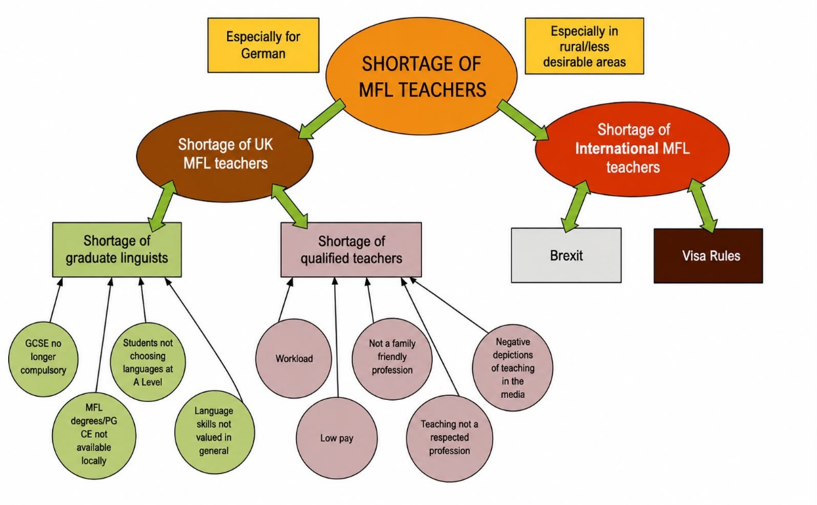
Figure 3: Summary of perceived reasons for recruitment difficulties
When asked to compare recruitment difficulty across subjects, 64% of respondents said it was harder to recruit language teachers than for other subjects.

Figure 4: Recruitment difficulty for languages vs other subjects
Retention
While recruitment is clearly a major concern, retention appears more stable. Just over half of respondents said they had little or no difficulty retaining language teachers, though nearly 10% reported considerable difficulty.

Figure 5: Perceived difficulty in retaining language teachers
Explanations for teacher attrition tend to fall into two main categories. Seven out of the 12 schools that responded to this particular question pointed to general teaching pressures, such as excessive workload and accountability demands, which might affect teachers across all subjects nationally. Finally, three of the 12 schools mentioned languages-specific challenges, where teachers face unique pressures related to languages that could lead to disengaged or unmotivated pupils, making classroom management and teaching outcomes more difficult.
Pressures of the role and possibly difficulty in promoting languages to students
Compulsory languages means that teachers encounter students in classes who have not chosen the subject. Behaviour can be a detrimental factor in our school.
On the other hand, schools reporting strong retention rates seemingly attributed this to a diverse range of positive factors. These include supportive and collaborative departments, which foster a sense of belonging and shared purpose, and a strong school reputation, often linked to external evaluation such as Ofsted ratings. Opportunities for continuing professional development (CPD) and clear pathways for growth are also mentioned as reasons why teachers remain. In addition, respondents reported that effective leadership and a supportive senior leadership team (SLT) create a stable and motivating environment. Finally, the survey found that a robust languages offer, such as having a large team, providing a range of languages, and opportunities to teach at KS5 helps sustain teacher engagement and job satisfaction.
a well resourced and supportive department with a good exam results and where languages is treated as a near core subject by SLT
Unlike recruitment, retention is seen as comparable across subjects by most respondents (Fig. 6).

Figure 6: How does teacher retention in languages compare with retention in other subject areas?
Discussion
Our research has thus revealed complexity in relation to languages provision in general (Zhu Hua et al., 2025) and also complexity in terms of teacher perceptions of the experience of recruiting and retaining languages teachers. We found that language teacher recruitment is perceived to be an issue for many schools, which is in line with other research in this area. Among our respondents, there was a general perception that it was more difficult to recruit languages teachers than teachers in other subject areas. However, this research has also highlighted that language teacher recruitment is not necessarily perceived as a challenge by all schools, as there is a mixed picture of teacher shortage.
Practitioners in some schools that struggle to recruit suggest that their location and (negative) school reputation might be an influencing factor in attracting and retaining qualified language teachers. Conversely, schools which do not report having issues with language teacher recruitment tend to attribute this to the desirability of their school more generally. This finding adds to previous research that has found that some schools find teacher recruitment more challenging due to structural, professional, and personal factors (e.g. Rhinesmith et al., 2024).
Respondents tended to be more optimistic about their school’s ability to retain languages teachers. While this is still a concern for many, it seems to be more in line with general teacher retention challenges and less of a ‘languages-specific’ problem. This finding should, however, be interpreted in the context of the sample, as the participating schools were all involved in a language-focused programme and may therefore not fully reflect the experiences of schools across the country. Even so, the finding warrants further investigation as recruitment and retention are often talked about in tandem, but this research suggests that it might be worthwhile to explore them separately, not least because the interventions to remedy recruitment and retention difficulties may be quite different (e.g., teacher financial incentive scheme).
Recommendations
NCLE research (e.g. Zhu et al, 2025) highlights the need for a nuanced, multi-faceted and context-sensitive policy response. The additional findings on recruitment and retention further strengthen this case. A one-size-fits-all approach will not address the complexities of language teacher recruitment and retention in secondary schools in England. This view is supported in this SchoolsWeek article, which explains that recruitment challenges are about more than numbers of teachers entering the profession; teaching quality, teacher location and subject area are also critically important.
National level recommendations
Develop a multilayered national strategy for language teacher recruitment targeting ‘hard-to-staff’ schools. The Education Endowment Foundation (EEF) review highlights workload reduction, flexible working, strong leadership, and targeted financial incentives (see below) as the most promising strategies for hard-to-staff schools, with workload management emerging as the top priority. Pachler (2024) highlights the important role of Higher Education-based ITE and also teacher agency in teacher recruitment and retention.
Visa and immigration reform to support language teacher recruitment: Simplify and support pathways for international language teachers to train and work in England. For example, revisit the visa requirement for overseas teachers of MFL to work in the UK, as proposed by Baroness Coussins in 2024. The impact of the most recent withdrawal of bursaries for international trainee teachers needs to be closely monitored.
Targeted incentives: Provide bursaries, relocation support, and, crucially, retention payments for language teachers specifically in hard-to-staff schools. Unlike STEM subjects, languages currently lack retention payments from the UK government, despite being a priority shortage subject.
School-Level Recommendations
Strengthen school leadership commitment: NCLE evidence (including discussions with the Language Leaders Forum and ASCL) highlights school leadership as a key factor in sustaining language provision.
Departmental investment and strong leadership: Support schools in building strong departmental cultures through targeted funding, leadership development and CPD.
Practitioner engagement: Involve teachers in policy development to ensure relevance and feasibility.
Consider school partnering through networks: Provide infrastructure so that ‘harder-to-staff’ schools can partner with schools with fewer recruitment challenges or build on the existing NCLE Strategic Learning Networks (SLN) so that schools can explore shared capacity and resources.
Higher Education and training
PGCE pathway protection: Reconsider closures of PGCE languages programmes in certain areas and expand access. Although this research has focused on Secondary languages, we also note that ITE for primary could incorporate a greater ML focus – following recommendations in the White Paper on Primary Languages (2019).
Career promotion: Collaborate with universities to promote teaching as a viable and rewarding career for linguists.
Conclusion
Language education in England faces ongoing recruitment and retention challenges. This research reveals that, from the practitioner perspective, recruitment challenges are seen as more of a pressing concern than retention issues, and that certain factors such as recruiting for specific languages (e.g. German) and school context play a critical role in the overall experience of recruitment and retention. Practitioner perspectives offer invaluable insights into the realities faced by schools, highlighting both effective practices and areas where further support is needed. While these findings should be interpreted in light of the study’s sample, they suggest that policy responses should be sensitive to differences in school context and recruitment needs. Continued attention to supporting the recruitment and retention of language teachers—particularly in schools facing greater staffing challenges—will help strengthen language provision and support equitable access to high-quality language learning opportunities for all pupils.
Along these challenges, there are also encouraging signs of progress, with growing system-wide engagement and concerted efforts across schools, policy actors, and the NCLE to strengthen leadership capacity, build professional networks, and extend support into “cold spots” where provision has been most fragile. These developments suggest a sector that, while facing significant challenges, is increasingly mobilising collectively to secure a more sustainable future for languages education.
References
Howson, John. 2026. 'More thoughts on the ITT round for 2026', published at https://johnohowson.com/2026/05/26/more-thoughts-on-the-itt-round-for-2026/ on 26 May 2026
Lee Owston and Jason Bradbury. 2024 ‘The challenges of teacher recruitment and retention in England’, published at https://educationinspection.blog.gov.uk/2024/09/17/the-challenges-of-teacher-recruitment-and-retention-in-england/ on 17 September 2024.
Long, Rorbert and Elliot Bridges. 2026. Teacher recruitment and retention in England. Collection of House of Commons Library. Available at https://researchbriefings.files.parliament.uk/documents/CBP-7222/CBP-7222.pdf
Pachler, Norbert. 2024. 'Teacher shortage: the example of England'. In Pädagogische Führung. Zeitschrift für Schulleitung und Schulberatung. 2/24 Personalplanung in Schulen, pp. 50-53.
Rhinesmith, Evan, J. Cameron Anglum, Aaron Park and Abigail Burrola. 2023. 'Recruiting and retaining teachers in rural schools: A systematic review of the literature', Peabody Journal of Education, 98.4: 347-363, https://doi.org/10.1080/0161956X.2023.2238491
Zhu, Hua, Elin Arfon and Ann-Marie Hunter. 2026. 'Complexity in secondary languages: How the local context shapes languages education in England', The Language Learning Journal, 54.1: 82-102, https://doi.org/10.1080/09571736.2025.2557456
Cite this Article
Ann-Marie Hunter and Zhu Hua. 2026. ‘Language Teacher Recruitment and Retention in England’s Schools: Practitioner perspectives’, Languages, Society and Policy, https://www.lspjournal.com/post/language-teacher-recruitment-and-retention-in-england-s-schools-practitioner-perspectives
About the Authors
Ann-Marie Hunter: was a Senior Research Fellow (Language Learning) for NCLE (National Consortium for Language Education) at the UCL Institute of Education, UK. Prior to NCLE, she was Lecturer in TESOL and Linguistics in School of Education, Language & Psychology, York St John University.
Zhu Hua: (祝华) is Professor of Language Learning and Intercultural Communication. She is Director of International Centre for Intercultural Studies; Director of Research and Innovation for NCLE (National Consortium for Languages Education); and Interim Director of Centre for Chinese Language Education at the UCL Institute of Education, UK